Search Website
Close
-
About us
-
What we do
-
Culture Fusion
Back -
BEES
-
About us
-
What we do
-
Culture Fusion
Back -
BEES
Search Website
Close
WFV, Devonshire Park, Keighley, 31.3.26
A group of seven met at Devonshire Park, Keighley, on a cloudy but fine morning and, guided by the pre-used leaflet provided by “Those Plant People”, set out to identify trees in early Spring. In the absence of leaves, previous knowledge of shape, growth patterns, bud colour and arrangement, and bark texture were our guiding features. Last year’s remains of leaves and fruit in the ground litter often clinched the decisions. Vivienne, on her second outing with BEES, provided valuable assistance in our identifications.
Perhaps it was the lack of leaves which drew more attention to other features. Huge knobbly growths of crown gall caused by bacterial infection were on many of the horse chestnut trunks and the prominent joints between the scion and rootstock stood out on some of the grafted specimens. Pine cone gall was well developed on willow. Slimy orange deer vomit slime mould had taken advantage of sap issuing from cuts in a trunk.
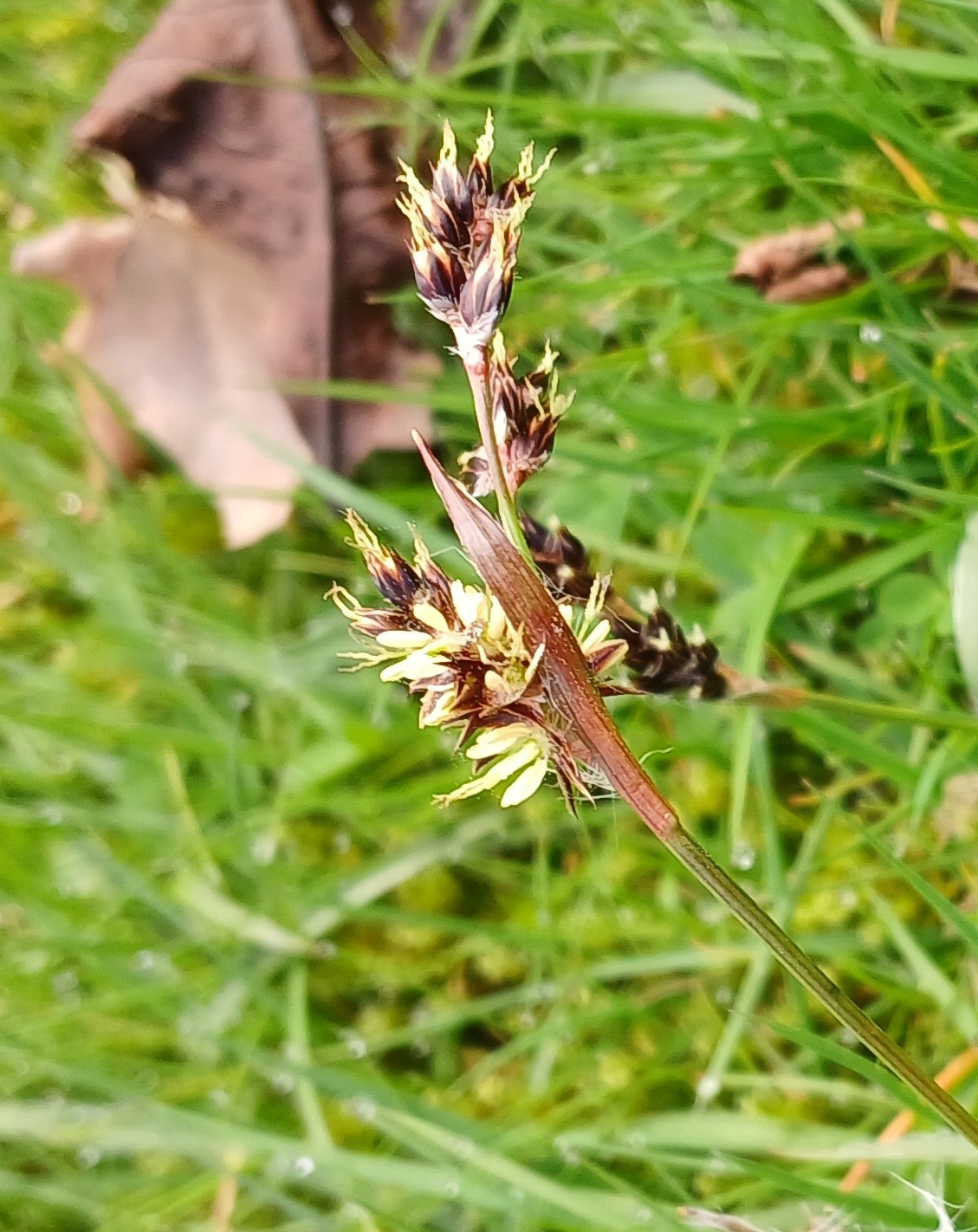
The yellow of Spring was seen in the Norway maple flowers and the celandines. A few bluebells were starting to open and field wood rush (main image) was in patches amongst the grass. Many of the twigs had a variety of lichen attached.
Birds seen today included robin, goldfinch, blue and long tailed tits, nuthatch, carrion crow and both song and mistle thrush. Coal tit, greenfinch, great tit and wren were heard. A buzzard flew over the park.
After the tree trail we headed to Cliffe Castle grounds where most ate lunch. After lunch chosen activities provided some disappointment. Those who visited the adjoining woodland did not strike lucky with a view of the lesser spotted woodpecker and those who visited the advertised exhibition of orchids from the Bradford herbarium in the museum had hoped to see more exhibits.
Thanks to those who supported the walk. It was a short BEES session but never-the-less, in my opinion, an enjoyable one.
Alice