Search Website
Close
-
About us
-
What we do
-
Culture Fusion
Back -
BEES
-
About us
-
What we do
-
Culture Fusion
Back -
BEES
Search Website
Close
Today we accepted an invitation from Angela, a group member, to visit a rewilding project set up by her family. Their land had included a field of neither use nor ornament.. The poor soil and bad drainage precluded agricultural use and the close growth of grasses out competed other plant species hence invertebrate life was minimal. Could building a pond solve the problem? We had come for the answer.
Four members of BEES and four from Judy Woods were warmly welcomed by Angela and her daughter. Over coffee, we learned that diggers had been brought in four years ago to excavate for the pond. It is fed naturally from soil drainage aided by measures like channelling rain-water from the house gutters. After further introduction Angela guided most of the group around the perimeter of the pond. Sally and I followed at recording pace and never caught up.
The wealth of species now thriving in this former unproductive field is amazing. While the owners admit to introducing plants, nature as hoped has added more. The pond, really a small lake, is full of species associated with both wild water and garden ponds. Rushes and sedges abound. While the surrounding area is still densely covered by the thick grass sward, low growing plants like self heal, the clovers and common mouse ear have colonised around the water margins. Amongst the grasses are odd plants of meadowsweet, yarrow and sneezewort. Tufted vetch has established and one piece of common vetch was recorded. Almost 80 plants were recorded. Numerous grasses were not identified.
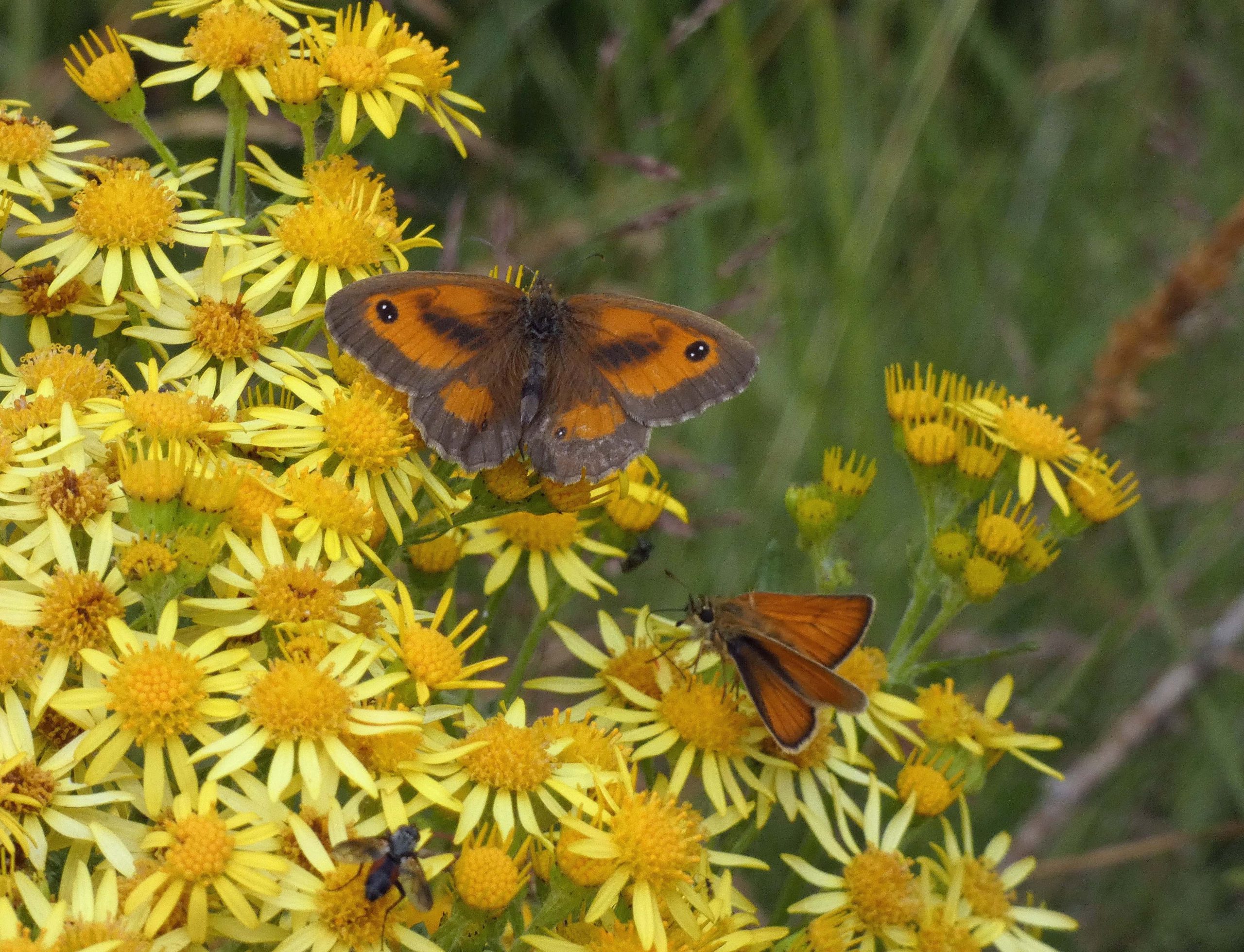
Butterflies were enjoying the plants. Red admiral, small tortoiseshell, peacock, green veined white, meadow brown, gatekeeper, large and small whites, small and large skippers and ringlet were seen. A bonanza of butterflies in an area previously almost devoid of them. Sadly, a peacock butterfly in its final stages rested on water plant leaves likely to join a recently formed food chain. Silver Y, pale straw peach, and inlaid grass-veneer moths flew around us. Clearly appreciating this oasis amidst fields were common blue, emerald and blue tailed damsel flies as well emperor and common darter dragonflies. Additionally, various flies, grasshoppers and a frog caught our attention while a kestrel flew and hovered above.
For most the day finished with lunch taken indoors, strawberries and cream provided by Angela and elderflower cake by Sally were much appreciated. During a second circuit for some of us a kite circled overhead.
Without a doubt this project is providing a new haven for wild life. It has clearly been a labour of love, hard work and expense I am sure that the future will bring not only population increases but even more diversity of species. Thank you Angela and family for inviting us to visit and for your hospitality.
Thank you from the wild life of Bradford too.
We had a super day.
Alice