Search Website
Close
-
About us
-
What we do
-
Culture Fusion
Back -
BEES
-
About us
-
What we do
-
Culture Fusion
Back -
BEES
Search Website
Close
Having used the train or own cars seven members met Stephen, our leader, at the Mill Bridge entrance to Skipton Castle Woods. The woods are a remnant of a great hunting woodland that stretched across North Yorkshire so are truly ancient woodland. The waterways provided power to local wool, corn and saw mills. Originally controlled by the castle the woods are now in the care of the Woodland Trust.
In contrast to our last visit, autumn 2019, it was fine with blue skies and sunshine. Once down the steps to ground level we were sheltered from the keen wind at street level. Our circular walk followed the valley trails with shorter sections on the upper paths. This blog is not a linear record of the day.
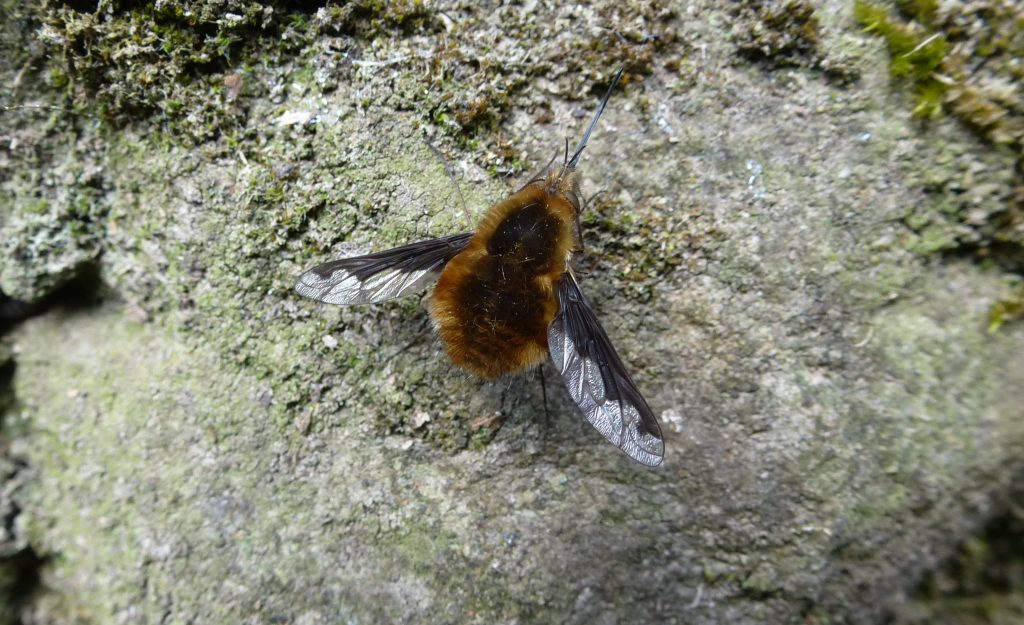
Soon after accessing the towpath we saw annual weeds in flower and regrowth of perennial plants. A very active bee fly took our attention on the Mill Bridge. We glanced at the castle walls and noted the signs of earlier industrial activity as we progressed to the woods proper.
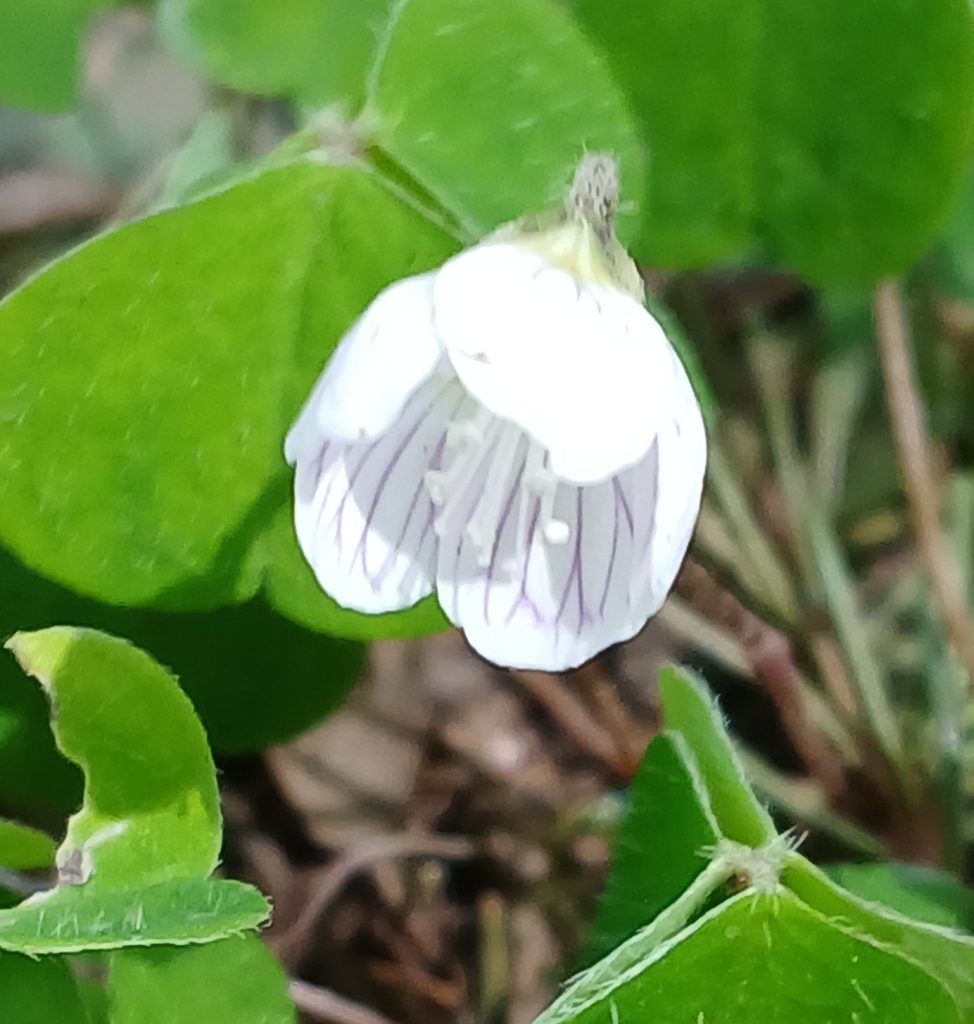
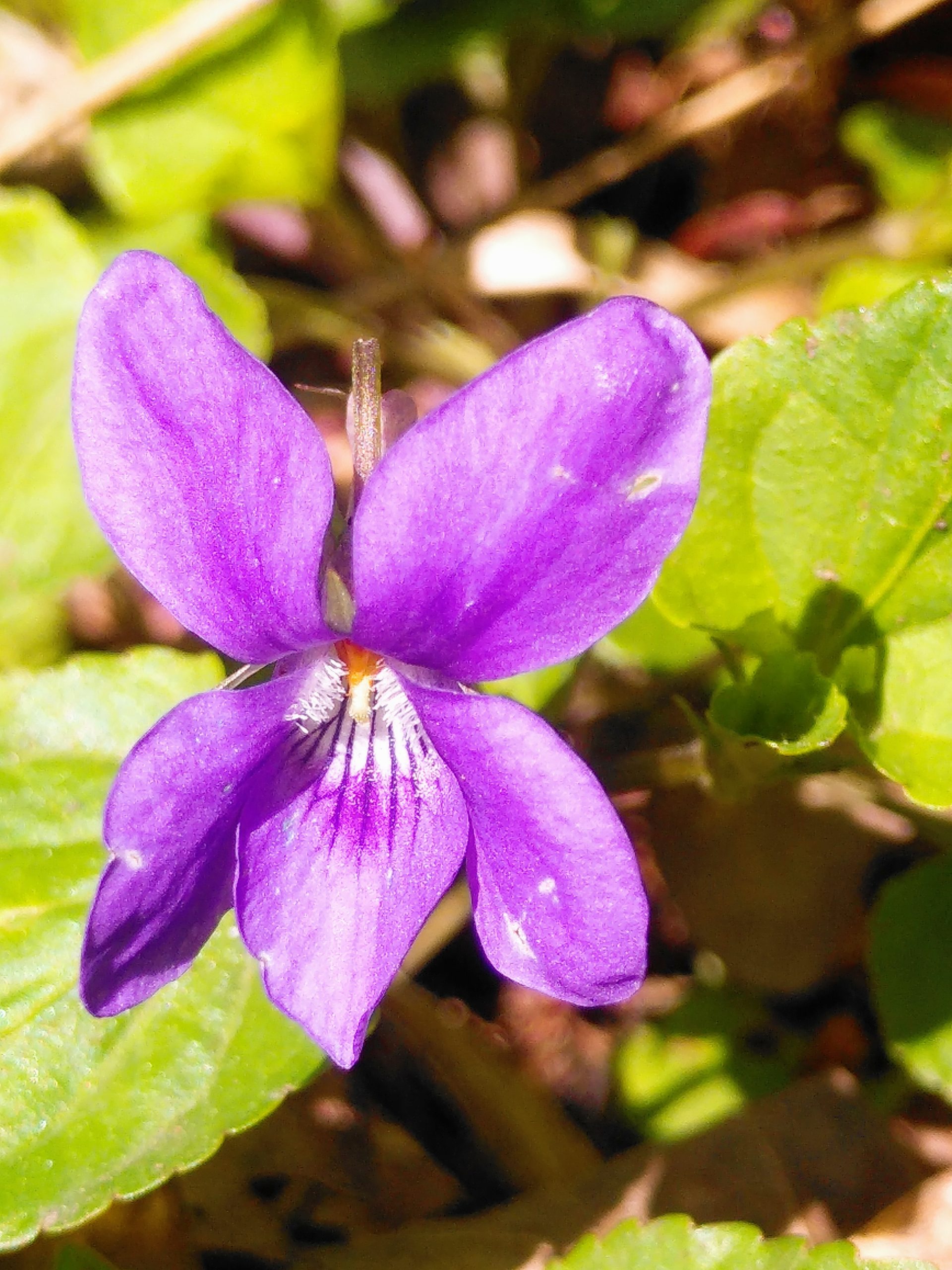
Once through the gates we were, without a doubt, in ancient woodland. Ramsons clothed the steep banks and carpeted much of the ground. Wood anemones starred on the woodland floor and eventually we found wood sorrel nestling on a shaded bank. Golden marsh marigolds shone on the round dam, golden saxifrage edged the beck, a few bluebells and dog violets were seen. In all, thirty herbaceous plants were recorded in flower including water avens and a single clump of fringe cups. Leaf buds were opening on the mainly deciduous trees with flowers seen on the non native sycamore. The unfurling croziers at the base of last year’s fronds led to discussion on identification features of shield ferns.
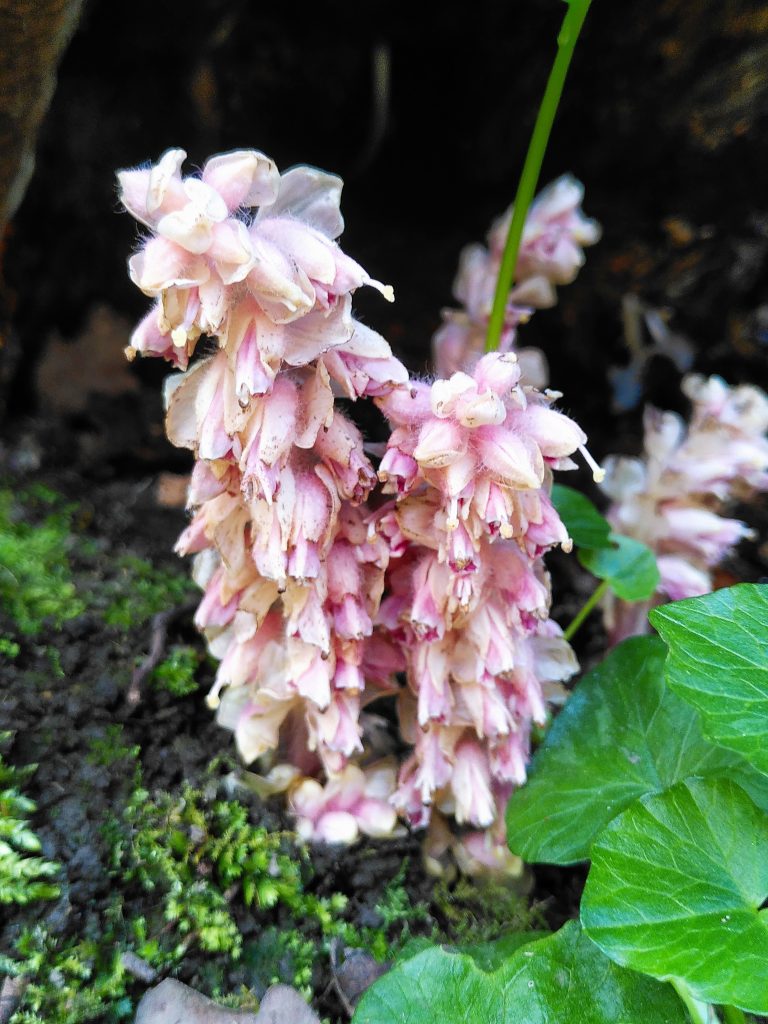
Although unfortunately in the shade, the long, curved, stone poetry bench provided ideal seating at lunch time. After lunch, Julia drew our attention to toothwort, our special plant of the day. Devoid of chlorophyll, the creamy white one-sided spikes cannot make food and gain nutrients by parasitising tree roots, in today’s case those of sycamore. Its genus name,Lathraea, translates from Greek as clandestine and secret which sums up its short life above ground in order to produce seeds.
In contrast to the lower areas, the drier upper reaches were covered in leaf litter with fresh vegetation being almost limited to wood sedge. There were more conifers here including larch with flowers. The fields over the wall on our return route provided sight of tortoiseshell and green veined white butterflies.
Birds seen or heard today were heron and mallard by the dam, robin, blackcap, siskin, mistle thrush, blue, great and coal tits, goldfinch, crow, wren and wagtail.
Once within the woodland it is easy to forget that in the 18th century this was an area of industrial activity and not the area of peace and beauty we enjoyed today. Many thanks to Stephen for planning and leading the walk and not only providing leaflets for later perusal but also delicious cake at lunchtime!
Alice